With Just A Hint Of Mayhem

Music reviews, gig reviews, fun trivia and extra added random stuff!

‘Hope I Get Old Before I Die: Why Rock Stars Never Retire’ – David Hepworth March 3, 2025


David Hepworth is a talented, world class music journalist. He began his career in journalism writing for the NME and Sounds (two of the classic UK music “inkies”). He joined Smash Hits magazine in 1979, and having turned it around financially and made it profitable, became its editor. He was behind the launch of a number of very successful music related magazines including, two of my favourites, Q (1986) and Mojo (1993). He has written for the UK newspaper The Guardian. He was a presenter of the long running BBC music show The Old Grey Whistle Test. He has been on other TV productions too, more of that later. Hepworth has also written some great books about music and the social history associated with it. I have read many of them; ‘Never a Dull Moment: 1971 The Year That Rock Exploded’ (2016), ‘Uncommon People: The Rise and Fall of the Rock Stars 1955-1994’ (2017), ‘A Fabulous Creation: How the LP Saved Our Lives’ (2019), and ‘Overpaid, Oversexed and Over There: How a Few Skinny Brits with Bad Teeth Rocked America’ (2020)

Now he has a new book, ‘Hope I Get Old Before I Die: Why Rock Stars Never Retire’. This is a tome that describes rock music’s third act. This is the sense that rock and roll never died, as predicted in the fifties and early sixties, but neither did so many of the young people (mostly men) that played a part in rock’s continued longevity. Back in 1965 when a 21 year old Roger Daltrey sang a 20 year old Pete Townshend’s classic line, “I hope I die before I get old” in the Who’s biggest hit single in the 60s, “My Generation” who might have guessed that they would still be performing the song in the 21st century. Daltrey is now 81 and Townshend is 79. Hepworth was one of the anchor’s of the broadcast of Live Aid in 1985. Hepworth’s new book begins at Live Aid with the sight of Paul McCartney closing the British leg of the show. Macca was seen as the grand old man of rock. Back then he was just 43. Now, 25 years into the 21st century we have many rock stars that are way beyond pensionable age. This is definitely not something most of us imagined back in the 60s and 70s. As a result many rock stars have become a part of the establishment with many receiving knighthoods and other royal honours.

I have loved all the books by David Hepworth that I have read so far, especially this new one. I love his take on the world of music and his immense depth of knowledge of the subject. Many times I have pondered on the fact that rock stars are living to ripe old ages and still performing and producing new music. In some cases this music is the finest of their long careers. Will today’s younger rock stars last as long as the rock ‘n’ roll pension brigade? I suspect that they will and I think Mr. Hepworth believes the same. In fact he talks of the possibility of technology giving rock stars a kind of immortality. Take a look at Abba Voyage for example. If you love great music, great music writing and if you have ever pondered about how rock stars are getting so old you will love this book! Click on Diversion Books to find a place to buy it for yourself!

If you have enjoyed this article, feel free to follow the blog. You can also follow us on Instagram, Bluesky, and Linkedin.

Are you interested in writing and reviewing for With Just A Hint Of Mayhem? If so then please get in touch via EMail.


Life in the Fast Lane: The Eagles’ Reckless Ride Down the Rock & Roll Highway – by Mick Wall July 28, 2023

Filed under: Book,Review — justwilliam1959 @ 12:42 pm
Tags: , , , ,

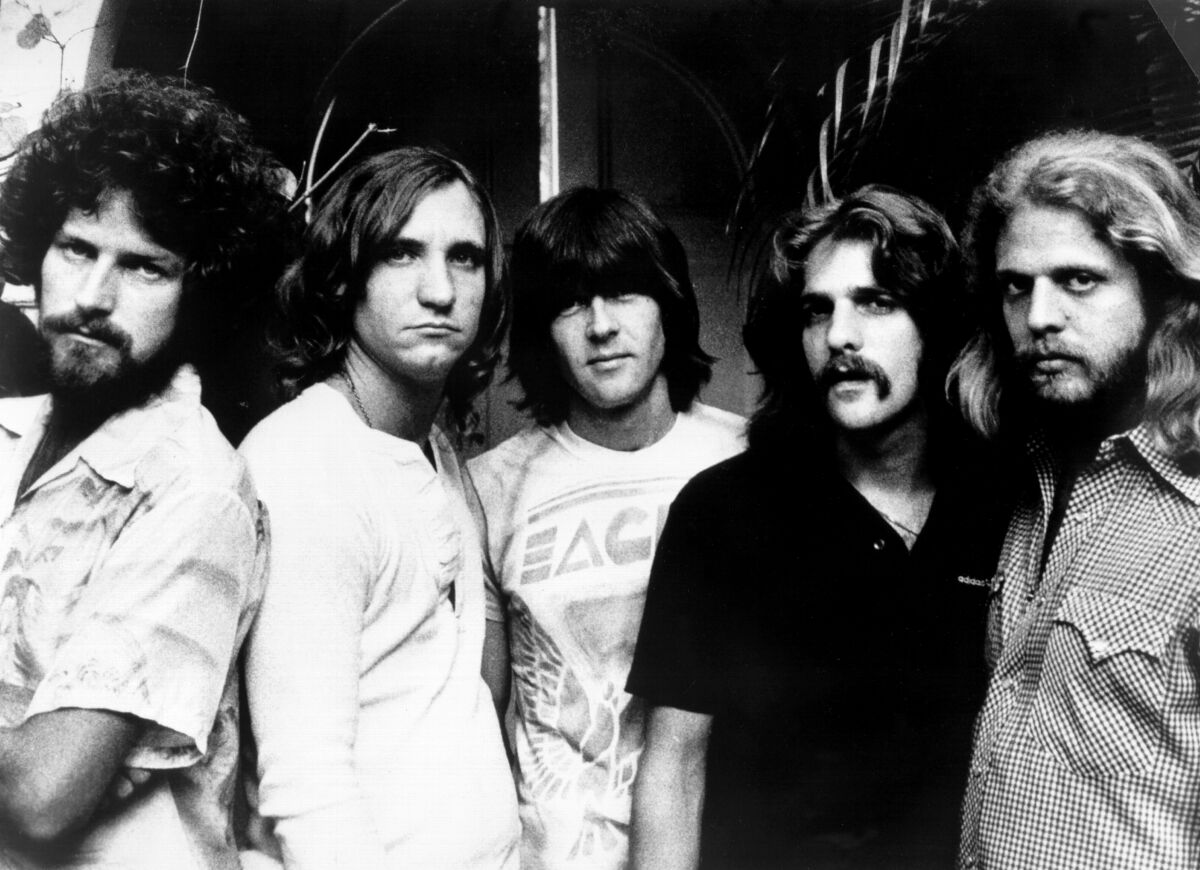
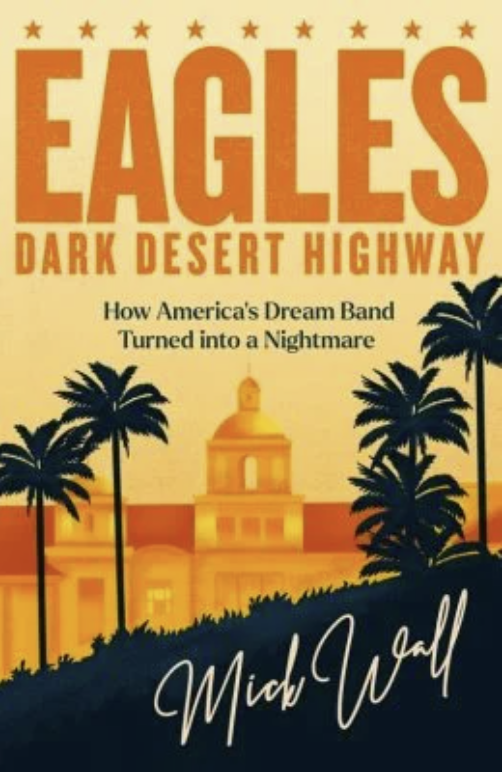
There have been enough books written about the Eagles to populate a small library and I have read quite a few of them. But this new one from prolific music writer, biographer and skilled journalist Mick Wall is something special indeed. For me, it is possibly the best Eagles tome written by anyone to date. The only way I can ever see this being topped is if Don Henley gets off his arse (that’ll be his ass to my American readers) and writes an autobiography. But even then, even a Henley memoir would never reach the same objective levels that Mick Wall hits. I should point out here that I have reviewed the US version of the book, which is exactly the same as the UK version, apart from the cover and the title. In the UK it was published in May this year and is called ‘Eagles – Dark Desert Highway: How America’s Dream Band Turned Into A Nightmare’

The Eagles deserve their place in the rock pantheon, and it would be fair to say that they were a veritable soft rock juggernaut in the 70s. In their career, they have sold more records than both Led Zeppelin and the Rolling Stones combined. But individually they were probably never as well known as Jagger, Richards, Plant and Page et al. That might have been one factor that drove the internecine fractions and jealousies that ultimately lead to their breakup, well their first big breakup at least, let’s not forget that Hell froze over in 1994.

Mick’s book is more than just a simple chronological history of the band though, it delves into how they came about, examining the whole 60s and 70s US West Coast music scene and the social history of the era. He draws on a wealth of existing material including reviews, interviews and other books and then overlays that with his own incisive and intelligent perceptions and thoughts. Obviously, there are some great insights into relationships within the band, but also some prosaic pieces on the Eagles’ interactions with everyone and everything from Linda Ronstadt, Fleetwood Mac, Jackson Browne, the Troubador, Patti Reagan and David Geffen. The opening chapter of the book is titled ‘Fast Forward – Don Henley Does Not Like Books About The Eagles’ and from Mick’s research that much is clear. He quotes Marc Eliot who published ‘To The Limit: The Untold Story Of The Eagles’ in 1998 in which Eliot details his attempts to communicate with Henley and Eagles manager Irving Azoff and seek their involvement. After some protracted efforts, Henley and Azoff told Eliot that he could go fuck himself!

The best parts of the book for me are where Mick delves into gorgeous descriptive detail, early on he writes of Linda Ronstadt “cute cut-off denim shorts and sweet brown doll’s eyes, the Troubador girl with the sunny small-town smile and the voice of a cactus mountain goddess, the super groovy chick that all the would-be groovy guys want the most”. In those few words, Mick shows how he can write from a US perspective, let’s be fair not many Brits are able to do that with such panache.

The Eagles’ early albums are given some acerbic depth when, thanks to Mick, you start to understand the relationship the band had with Glyn Johns when recording with him in the UK. They hated him and probably the UK too at that time. Although how much of that was related to Glyn Johns’ not allowing them access to drugs, groupies and late nights we may never know. Johns’ says of “Best Of My Love” “That was the record that really put them on the map after they turned themselves into what they thought was a rock ‘n’ roll band” Just to make it clear though, Johns then adds the punch line “a pretty lame one in my view!” 

Obviously, the album that defined the band for many, ‘Hotel California’ plays a big part in the book. By this time Joe Walsh had joined the band and in any other parallel universe that would have given them the kudos and cred that they desired, but in this one, it didn’t, although Walsh did add a new meatier dimension to their sound. As Mick states, the Eagles were never anybody’s favourite band even if they released songs that found their way into many people’s lists of favourite songs of all time. Mick delves into the stranger rumours that still persist about the subject of the title song. Was it about satanic worship, cannibalism or heroin addiction? I suspect that addiction might have been the main theme, but lyrically there are obvious pointers to the prime fallen angel himself, Lucifer. Especially the reference to the beast. Did the ‘steely knives’ refer to a human sacrifice? Was the song a cryptic description of the band selling their soul to the devil via Anton LaVey the head of his own Church of Satan? As Mick says this was not the first time satanic influence had been thrown at rock ‘n’ roll. Personally, I don’t believe the satanic stuff in relation to the song, but everyone has a different interpretation, right?

Ultimately the ‘Hotel California’ became somewhat of a millstone for the band, not a bad millstone to be fair, but how the fuck do you follow something like that! Well ultimately, they followed it with 1979’s ‘The Long Run’ and the first Eagles implosion. Mick describes both really well especially the apparent lack of quality control that demeaned the album. “The Greeks Don’t Want No Freaks”? Seriously? Just reading this book it becomes somewhat obvious that the Eagles would never stay together forever, and Mick handles the whole slow death of a mega globe-straddling band with impeccable style and skill. Clearly, the band didn’t stay in the coffin for long and there have now been numerous reunion tours. The epilogue covers a relatively recent Hyde Park show from what remains of the band now that Glenn Frey and now Randy Meisner are no longer with us and country star Vince Gill is a part of the band.

As I said earlier this is probably the best book about the Eagles ever written and you should read it whether you like the band or not on reflection they almost certainly aren’t your favourite band. So do something that Don Henley definitely won’t do, buy and read this book, you won’t regret it!

Click here to order it in the USA and here to order it in the UK.

If you have enjoyed this article, feel free to follow the blog, or follow us on; Facebook, Twitter, Instagram, EMail. Are you interested in writing and reviewing for With Just A Hint Of Mayhem? If so then please get in touch.